Zenith Flow's Journey from Rule-Based Sorting to AI Personalization

The Friction of Fabric: When Physical Experience Meets Digital Commerce
Context: For Zenith Flow, scaling to $2.5M monthly GMV exposed a fundamental e-commerce paradox: Fabric texture cannot be experienced online, leading to high return rates when products don't meet customer expectations.
At this stage, standard rules failed. The active, health-conscious individuals aged 25-45 demanded tactile relevance. Manual sorting algorithms couldn’t bridge the sensory gap between digital listings and physical expectations, causing 30% of orders to boomerang back as returns. Technical jargon in product descriptions further alienated customers, while sizing uncertainties created a vicious cycle of exchanges and dissatisfaction.
From Heuristics to High-Dimensional Intelligence
To solve this, Zenith Flow deployed WooRec.
Note: Given their enterprise scale and data sovereignty needs, they leveraged WooRec Private Deployment for complete algorithmic control.
The transformation wasn’t instant. We architected a phased evolution of their recommendation engine:
Phase 1: Semantic Recall Beyond Keyword Matching
Powered by WooRec Strategy Module
We needed to transcend basic product tagging. We implemented a Hybrid Recall strategy:
- Foundation: Vector Retrieval (Embedding):
- We mapped users and items into a 256-dimensional vector space using FAISS, encoding latent features like fabric composition, compression ratio, and climate suitability.
- Advanced: Real-time Intent (U2I):
- The Logic: Session embeddings captured micro-behaviors—hover patterns on fabric swatches, comparison views between compression levels, and scroll velocity on technical specs.
- The Result: This revealed “tactile affinities”—connecting customers to products with similar hand-feel and performance characteristics, even when textual descriptions diverged.
Phase 2: DeepFM for Tactile Prediction
Powered by WooRec Model Serving
This became the core of the engine.
- The Iteration: Initially, the system relied on Logistic Regression. However, this failed to capture non-linear interactions between fabric properties, body metrics, and usage contexts.
- The Upgrade: We upgraded the ranking model to DeepFM.
- Why this model?: By embedding 40+ features (fabric density, UV protection rating, customer body shape clusters) into a wide-and-deep architecture, WooRec learned memorization patterns (e.g., “customers who buy high-compression leggings also prefer moisture-wicking tops”) while generalizing to new combinations (e.g., “yoga enthusiasts in humid climates favor breathable mesh panels”).
- The Goal: Precise scoring for p(Comfort Match) and p(Repurchase), directly targeting
Return Ratereduction.
Phase 3: Business Logic with Multi-Task Optimization
Powered by WooRec Rule Engine
Raw scores needed business alignment. We applied final adjustments:
- Diversity (MMR): Enabled Maximal Marginal Relevance to prevent recommendation fatigue in high-velocity categories.
- Inventory-Aware Weighting: Boosted items based on multi-warehouse availability and sustainable material margins, ensuring AI drove both conversions and inventory efficiency.
The Sensory Interface: Where AI Meets Athleisure
Here is how these intelligent recommendations manifest on the Zenith Flow storefront:
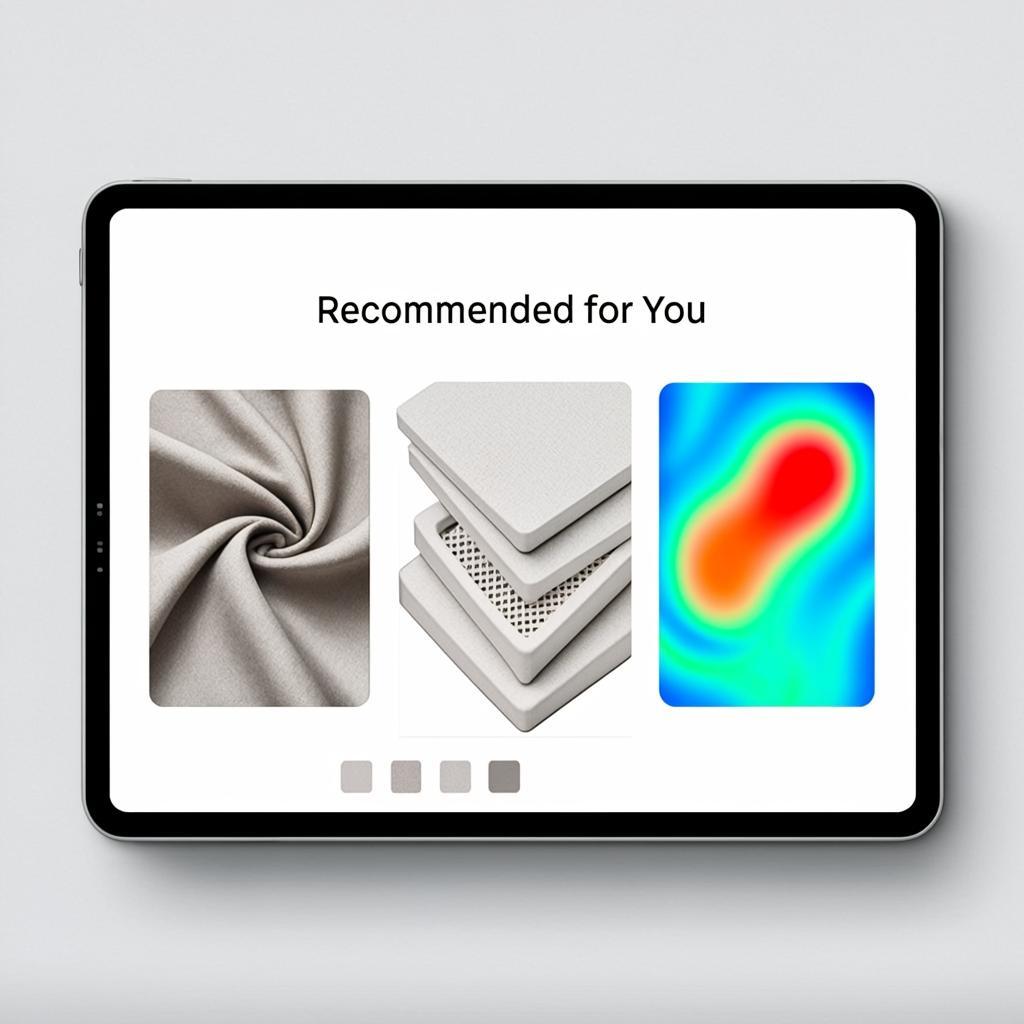 *Figure 1: WooRec-powered recommendations with integrated 3D fabric visualization and compression analysis*
The Impact: 40% Fewer Returns, 68% Higher Repurchases
The private deployment enabled rapid model iteration. By configuring these strategies, Zenith Flow achieved:
- Return Rate: Reduced by 40% (30% → 18%).
- Repurchase Rate: Increased by 68% (25% → 42%).
- Bundle Purchase Rate: Surged by 86.7% (15% → 28%).
- Average Order Value: Grew 49.3% ($75 → $112).
- Customer Satisfaction: Jumped 35.4 points (65 → 88).
Customer Voice
“Moving from manual rules to DeepFM was transformative. The system now understands unspoken tactile preferences—how a customer perceives ‘compression’ or ‘breathability’ without explicit feedback. The 40% reduction in returns proves our AI finally bridges the digital-sensory gap.” — Alex Rivera, Chief Technology Officer at
Zenith Flow
Ready to Engineer Your Personalization?
You don’t need vendor lock-in to build cutting-edge recommendation systems. With WooRec Private Deployment, you get source-code control and enterprise-grade deep learning.