From Self-Built Struggles to Deep Learning Precision: Apex Auto Customs' Compatibility Revolution
The Compatibility Crisis: When 25% of Sales Come Back
Context: For Apex Auto Customs, scaling to $1.8M monthly GMV brought a critical challenge: High return rates (25%) due to compatibility issues - customers receiving parts that don't fit their specific vehicle models.
At this stage, standard rules failed. The auto enthusiasts and professional modifiers demanded precision. Their self-developed system collapsed under the complexity of matching 5,000+ SKUs across countless vehicle configurations. Customers received incompatible brake calipers for their Audi A4 or ill-fitting spoilers for their Mustang GT, triggering a costly cycle of returns and support tickets. Manual compatibility checks became unsustainable as they expanded across North American and European markets with varying regulations.
From Rules to Deep Learning: The AI-Powered Compatibility Engine
To solve this, Apex Auto Customs deployed WooRec.
Note: They leveraged WooRec Private Deployment for the perfect balance of speed and control.
The transformation wasn’t instant. We architected a phased evolution of their recommendation engine:
Phase 1: Expanding the Candidate Pool with Vector Retrieval
Powered by WooRec Strategy Module
We needed to move beyond simple keyword matching. We implemented a Hybrid Recall strategy:
- Foundation: We started by ensuring popular items were visible via Hot Retrieval, solving the Cold Start problem for new vehicle models.
- Advanced: We implemented Vector Retrieval (Embedding) to map complex vehicle-part relationships into high-dimensional space.
- The Logic: We encoded vehicle Year/Make/Model (YMM) specifications and part attributes into shared vector embeddings using Graph Embedding techniques. This created a semantic compatibility space where “2019 BMW M3 brake pads” naturally clustered with compatible calipers and rotors.
- The Result: This captured latent compatibility relationships beyond textual matches, finding parts that fit based on engineering specifications rather than just keywords.
Phase 2: The Model Evolution (LR to MMOE)
Powered by WooRec Model Serving
This is the core of the engine. To achieve the target Conversion Rate, we iterated through three stages:
- The Baseline (Logistic Regression): Initially, we used linear models. While fast, they failed to capture complex interactions between vehicle attributes (year, make, model, engine type) and part specifications.
- The Upgrade (DeepFM): We introduced Deep Factorization Machines to learn high-order feature interactions, significantly improving accuracy on sparse compatibility data. This addressed the “cold vehicle” problem for rare models.
- The Final State (MMOE):
- Why this model?: To simultaneously optimize for both Conversion Rate (CVR) and Return Rate reduction (a proxy for compatibility accuracy), we deployed Multi-Task Mixture of Experts (MMOE). This architecture shared embeddings across tasks while using specialized expert networks for CVR prediction and compatibility scoring, eliminating the negative transfer between objectives that plagued single-task models.
Phase 3: Traffic Control & Business Logic
Powered by WooRec Rule Engine
Raw scores are just probability predictions. To align with business goals, we applied a Traffic Control Layer:
- Diversity (Scatter/Shuffle): We implemented a sliding window rule—no more than 2 items from the same category in a row—to prevent visual fatigue and showcase complementary parts (e.g., brake pads followed by rotors, not another brake pad).
- Business Injection (Hard Insertion): Specific slots (e.g., Position 4 and 10) were reserved for
Apex Auto Customs’s high-margin house brands and regulatory-compliant parts. - Dynamic Weighting: We boosted items based on Inventory Depth and Regulatory Compliance Status, ensuring the AI prioritized in-stock, legally compliant parts across different regions.
The Seamless Frontend Experience
Here is how these intelligent recommendations appear on the Apex Auto Customs storefront:
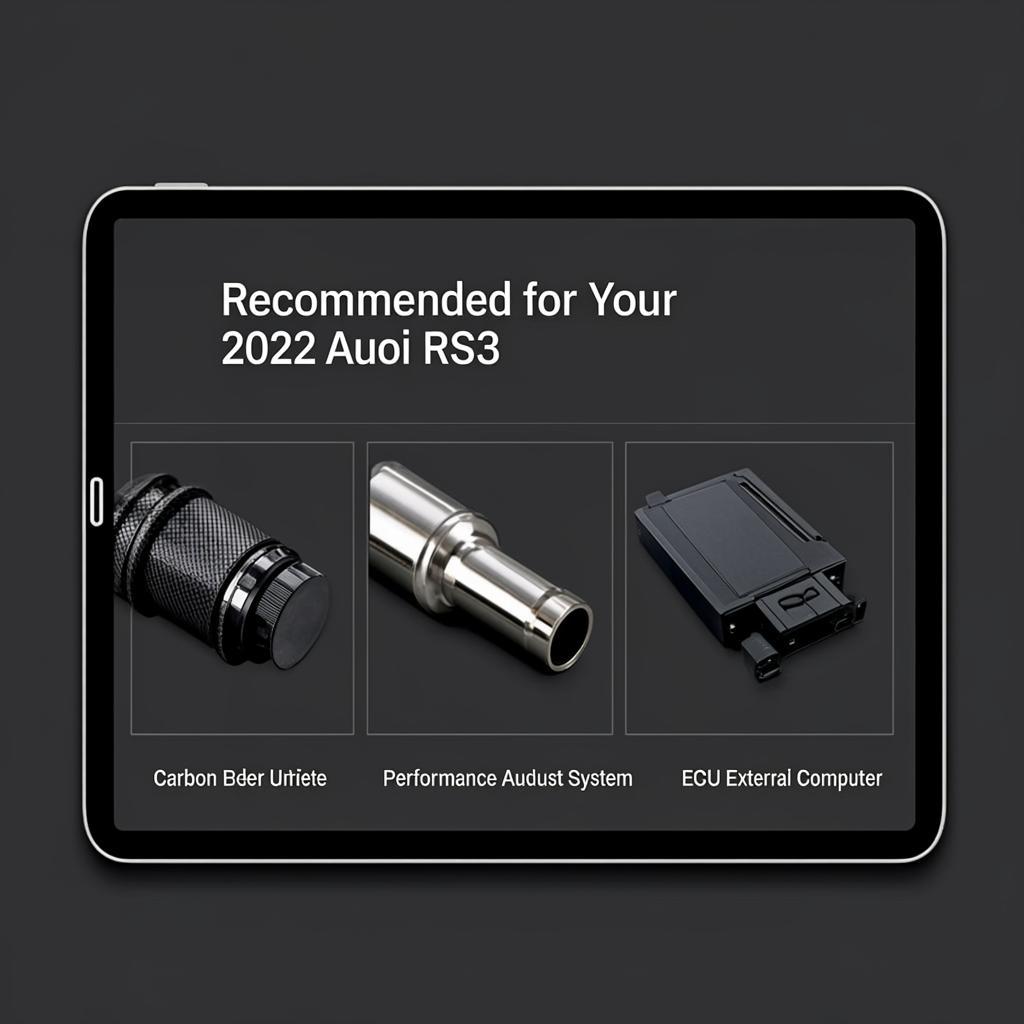 *Figure 1: The result of WooRec's engine—hyper-relevant product recommendations displayed to the user.*
The Impact: 68% Conversion Rate Surge
The speed of deployment meant faster results. By toggling on these strategies, Apex Auto Customs achieved:
- Return Rate: Decreased by 60% (from 25% to 10%).
- Vehicle Compatibility Search Accuracy: Improved by 35.7% (from 70% to 95%).
- Average Order Value: Increased by 26.7% (from $225 to $285).
- Conversion Rate: Increased by 68% (from 2.5% to 4.2%).
- Customer Lifetime Value: Increased by 43.4% (from $680 to $975).
- Customer Support Tickets: Decreased by 62.5% (from 1200 to 450).
Customer Voice
“Moving from our self-built system to MMOE was a turning point. The system now balances user intent with our business inventory logic perfectly. The 68% lift in Conversion Rate speaks for itself.” — Marcus Chen, Head of Engineering at
Apex Auto Customs
Ready to Configure Your Growth?
You don’t need a team of data scientists to build a world-class recommendation engine. With WooRec, it’s just a matter of configuration.