BeanCraft Roasters Drives 83.3% Cross-Sell Surge with Custom AI Recommendation Engine
The Equipment Compatibility Crisis
Context: For BeanCraft Roasters, scaling to $2.5M monthly GMV brought a critical challenge: Equipment mismatch issues where customers purchase beans incompatible with their brewing methods, resulting in negative experiences.
At this stage, standard rules failed. The coffee enthusiasts and specialty coffee shops demanded relevance. Their self-developed system couldn’t prevent customers from buying Ethiopian beans requiring paper filters for espresso machines equipped only with metal baskets, creating cascading returns and eroding trust in their “Precision in Every Cup” promise.
From Legacy Rules to Multi-Task Deep Learning
To solve this, BeanCraft Roasters deployed WooRec.
Note: They leveraged WooRec Private Deployment for the perfect balance of speed and control.
The transformation wasn’t instant. We architected a phased evolution of their recommendation engine:
Phase 1: Semantic Candidate Expansion
Powered by WooRec Strategy Module
We needed to move beyond basic keyword matching. We implemented a Hybrid Recall strategy:
- Foundation: We started by ensuring popular items were visible via Hot Retrieval, solving the Cold Start problem for new brewing equipment.
- Advanced: Vector Retrieval (Embedding)
- The Logic: We mapped users and items into a high-dimensional vector space using FAISS/Graph Embedding, capturing latent relationships between brewing methods, flavor profiles, and equipment types.
- The Result: This allowed us to discover “compatibility clusters”—finding items that were functionally related beyond textual descriptions (e.g., linking coarse-grind beans to French press users).
Phase 2: Multi-Task Model Evolution (LR to ESSM)
Powered by WooRec Model Serving
This is the core of the engine. To achieve the target cross-sell rate, we iterated through three stages:
- The Baseline (Logistic Regression): Initially, we used linear models. While fast, they failed to capture complex feature interactions between freshness constraints and equipment specs.
- The Upgrade (DeepFM): We introduced Deep Factorization Machines to learn high-order feature interactions, improving accuracy on sparse compatibility data.
- The Final State (ESSM):
- Why this model?: To solve the CVR estimation bias inherent in subscription-focused businesses, we deployed Entire Space Multi-Task Model (ESSM). This simultaneously optimized CTR for equipment discovery and CVR for subscription renewals, resolving the tension between immediate cross-sell and long-term retention.
Phase 3: Freshness-Aware Traffic Control
Powered by WooRec Rule Engine
Raw scores are just probability predictions. To align with business goals, we applied a Traffic Control Layer:
- Diversity (Scatter/Shuffle): We implemented a sliding window rule—no more than 2 items from the same origin in a row—to prevent flavor fatigue.
- Business Injection (Hard Insertion): Specific slots (e.g., Position 4 and 10) were reserved for
BeanCraft Roasters’ high-margin proprietary brewing accessories. - Dynamic Weighting: We boosted items based on Inventory Freshness and Profit Margin, ensuring the AI prioritized beans nearing peak roast dates while protecting margins on premium equipment.
The Compatibility-First User Experience
Here is how these intelligent recommendations appear on the BeanCraft Roasters storefront:
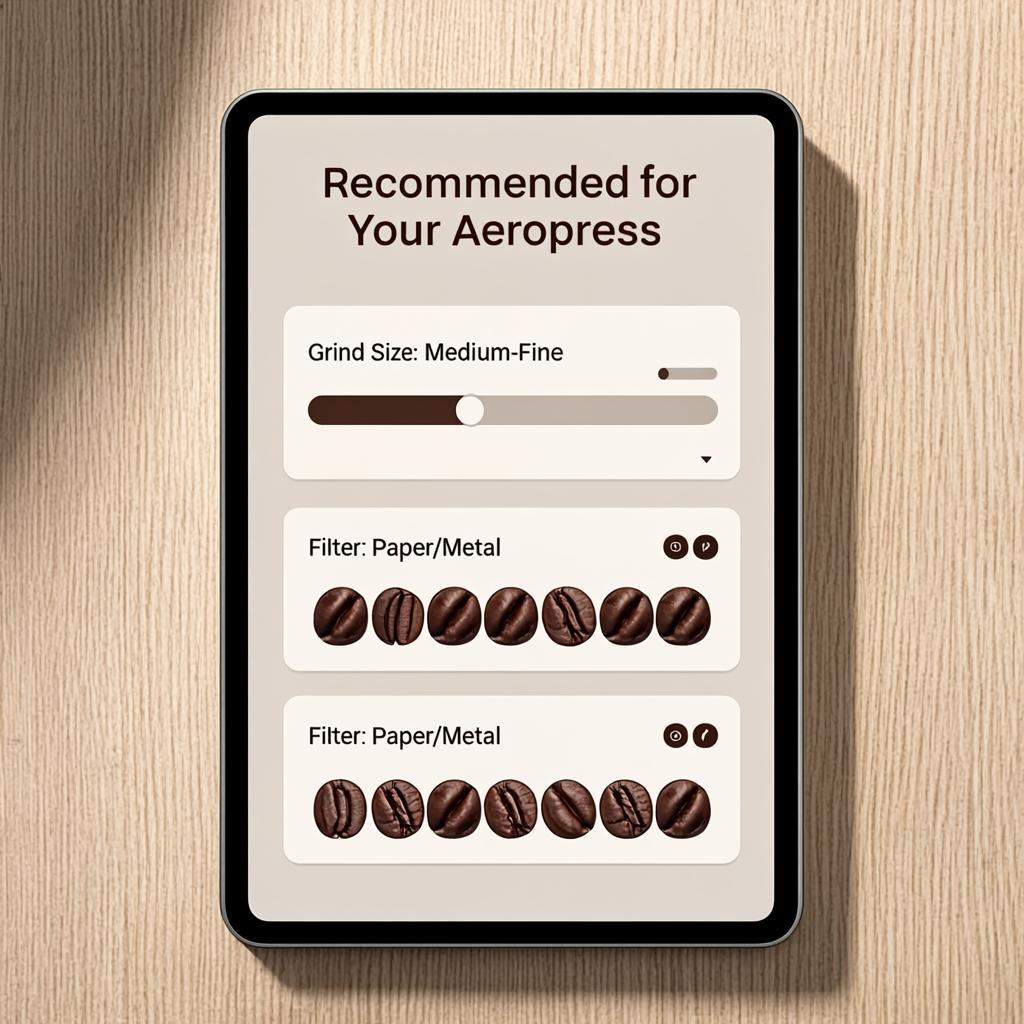 *Figure 1: The result of WooRec's engine—equipment-specific recommendations with compatibility indicators.*
The Impact: 83.3% Cross-Sell Growth
The speed of deployment meant faster results. By toggling on these strategies, BeanCraft Roasters achieved:
- Cross-sell rate: Increased by 83.3%.
- Subscription renewal rate: Improved by 20% (from 65% to 78%).
- Return rate: Decreased by 62.5% (from 8% to 3%).
- Average order value: Increased by 28.9% (from $45 to $58).
- Customer satisfaction score: Improved by 21.1% (from 3.8 to 4.6).
Customer Voice
“Moving from manual rules to ESSM was a turning point. The system now balances user intent with our business inventory logic perfectly. The 83.3% lift in cross-sell rate speaks for itself.” — Sofia Chen, Head of Data Science at BeanCraft Roasters
Ready to Configure Your Growth?
You don’t need a team of data scientists to build a world-class recommendation engine. With WooRec, it’s just a matter of configuration.