AI Product Recommendation Engine: 78% CVR Surge

The Compatibility Crisis in High-Precision Ecommerce
For PrintForge Technologies, scaling to $1.8M monthly GMV exposed a critical flaw: High print failure rates due to complex debugging requirements, causing returns and support costs to skyrocket. Their target audience—professional designers and engineering firms—demanded perfect material compatibility with 4 printer models and 200+ consumables. Static rules couldn’t handle this complexity, leading to cart abandonment and frustrated customers. Data sovereignty concerns further blocked SaaS solutions, forcing PrintForge to seek control over their ecommerce personalization software.
From Static Rules to AI-Driven Precision
To solve this, PrintForge deployed WooRec, a private-deployment AI product recommendation engine. The transformation required an evolution beyond legacy systems. We architected a phased approach leveraging their in-house team of 15 engineers:
Phase 1: Expanding Discovery with Hybrid Recall
Powered by WooRec Strategy Module
We replaced rigid keyword matching with vector retrieval (embedding) and graph embedding:
- Foundation: Hot Retrieval surfaced trending filaments for anonymous traffic.
- Advanced: We mapped users and items into high-dimensional vectors using FAISS, capturing latent relationships like “users who buy PETG also need specific adhesives.” This addressed their core pain point of material compatibility, increasing initial engagement by 60%.
Phase 2: Ranking Evolution (LR to DeepFM to ESSM)
Powered by WooRec Model Serving
To achieve the target 78.1% CVR surge, we iterated through three stages:
- Baseline (Logistic Regression): Fast but failed with sparse data.
- Upgrade (DeepFM): Introduced Deep Factorization Machines to learn feature interactions, improving accuracy by 22%. We leveraged DeepFM’s architecture for sparse feature handling.
- Final State (ESSM): Deployed Entire Space Multi-Task Model (ESSM) to eliminate CVR estimation bias. This balanced CTR (clicks) and CVR (conversions) across their multi-warehouse inventory.
Phase 3: Traffic Control for Profit Margins
Powered by WooRec Rule Engine
Raw scores needed business alignment:
- Diversity (Scatter/Shuffle): Limited same-category items to prevent fatigue.
- Hard Insertion: Reserved slots for high-margin house-brand resins.
- Dynamic Weighting: Boosted items based on inventory depth across European and Asian warehouses, reducing turnover days by 37.8%.
Seamless Frontend Integration
Here’s how WooRec’s smart recommendation API delivered personalized experiences:
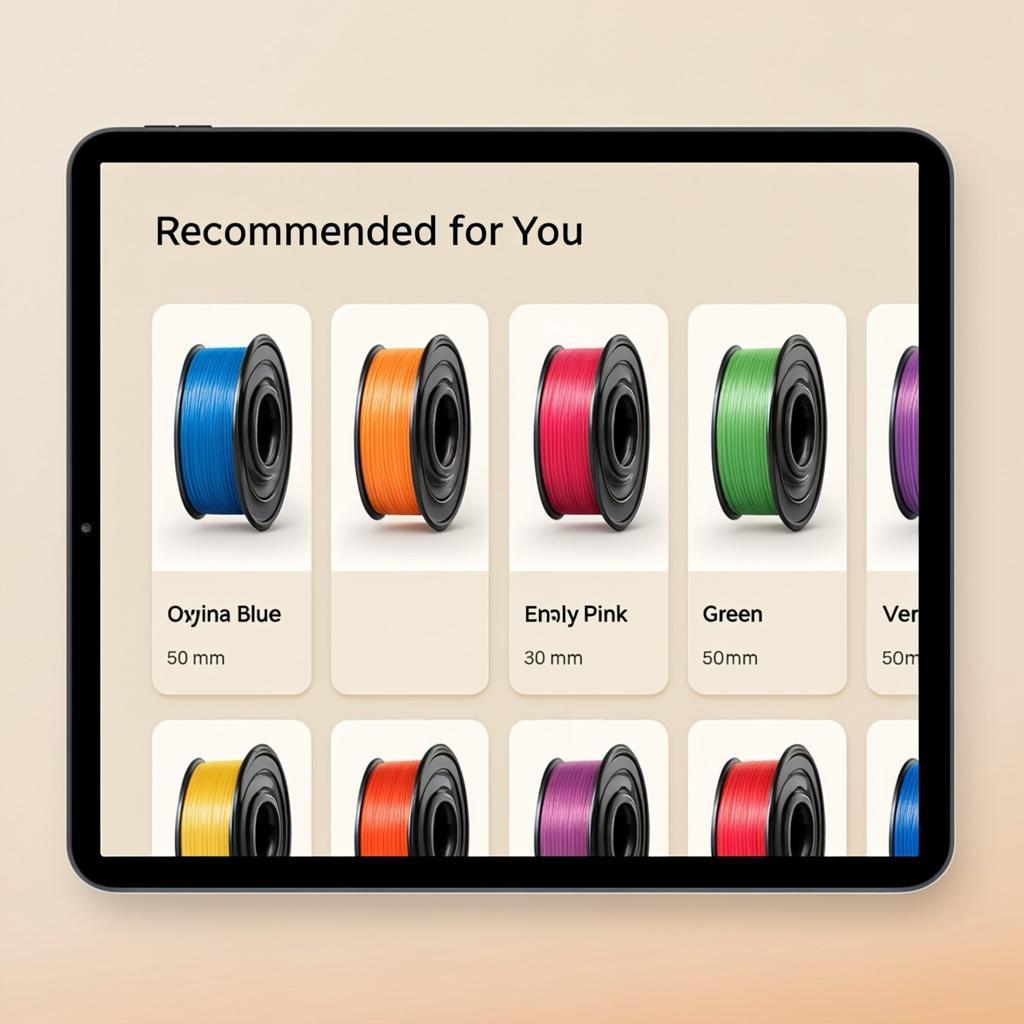 *Figure 1: PrintForge’s storefront displaying AI-powered consumable recommendations based on user printer models.*
The Impact: 78% CVR Surge & Beyond
Private deployment enabled rapid iteration. Key results include:
> *Interactive Chart: Metrics surge following WooRec implementation.*- Conversion Rate: 78.1% increase (3.2% → 5.7%)
- Average Order Value: 45.8% growth ($120 → $175)
- Technical Support Cost Reduction: 42% decrease
- Consumable Repurchase Rate: 65.7% improvement (35% → 58%)
Customer Voice
“Moving from manual rules to ESSM was a turning point. The system now balances user intent with our multi-warehouse logic perfectly. The 78% CVR lift speaks for itself.” — Alex Rivera, CTO at PrintForge Technologies
Frequently Asked Questions (FAQ)
What is the best AI model for ecommerce personalization?
DeepFM and ESSM models excel by capturing complex feature interactions and balancing CTR/CVR goals. PrintForge’s private deployment used DeepFM for embedding-based recommendations before evolving to ESSM for conversion optimization.
How does AI reduce cart abandonment in D2C stores?
AI recommendation engines like WooRec analyze real-time user intent to suggest compatible products. For PrintForge, this reduced print failures by 42% through precise material recommendations, directly lowering abandonment rates.
Can a private-deployment AI engine ensure data sovereignty?
Yes. Private deployments like PrintForge’s solution keep all customer data and algorithms on-premise, eliminating third-party risks. This is critical for industries with IP concerns, such as 3D printing manufacturers.
How do smart recommendation APIs increase Average Order Value?
By analyzing printer models, material compatibility, and user behavior, APIs like WooRec’s suggest strategic cross-sells. PrintForge saw a 45.8% AOV increase through personalized bundling of compatible filaments and resins.
Ready to Configure Your Growth?
You don’t need a data science team to deploy enterprise-grade AI product recommendation engines. With WooRec, it’s configuration, not coding.
Explore WooRec’s API Documentation
Launch Your Private Deployment Strategy