52% CVR Surge with AI Recommendations
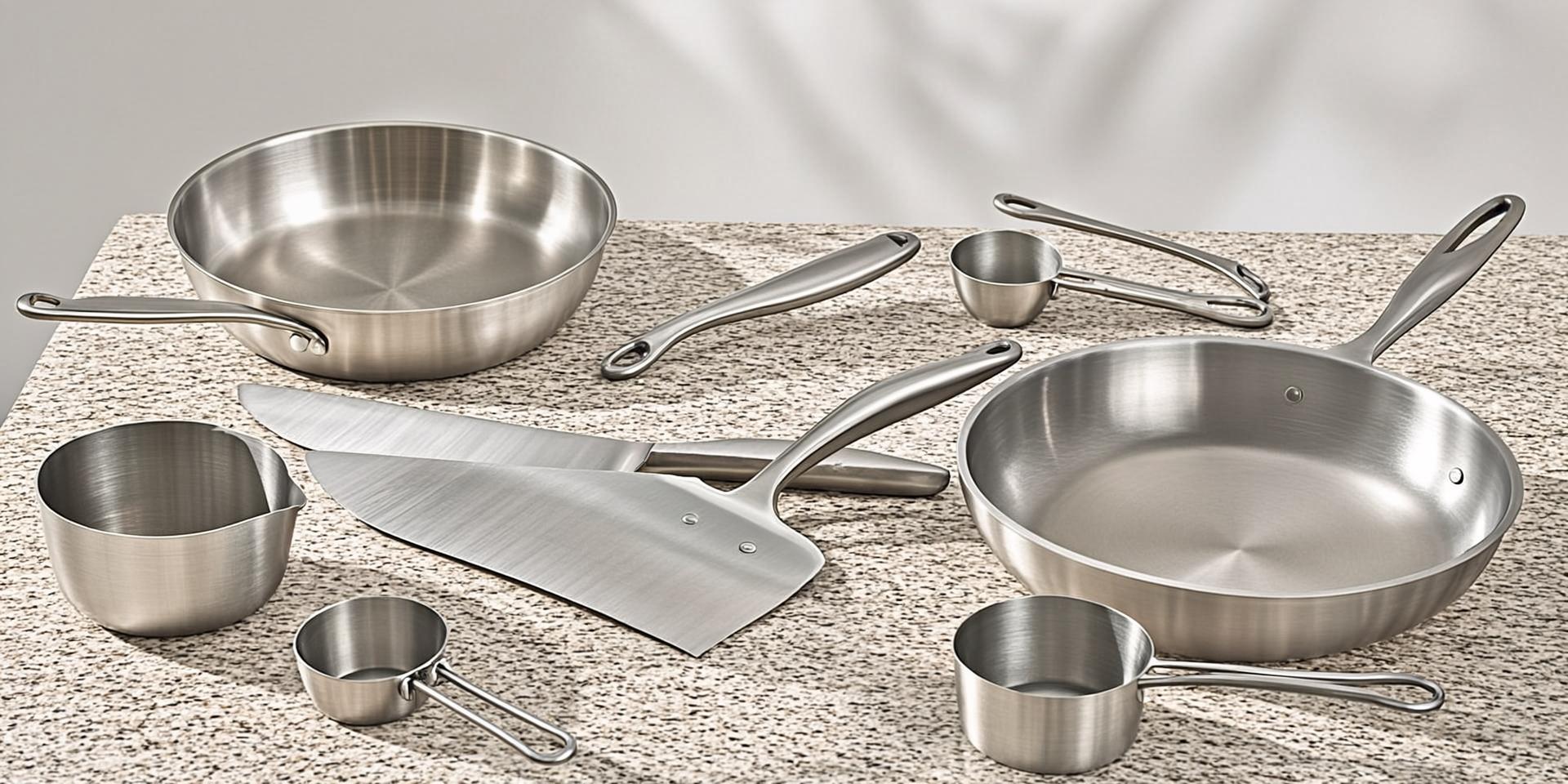
The Limits of Manual Curation in Kitchenware Ecommerce
Context: For CulinaryCraft Pro, scaling to $2.8M monthly GMV brought a critical challenge: Coating Safety: Customers increasingly concerned about chemical coatings on cookware and their potential health impacts, leading to increased return rates and negative reviews.
At this stage, standard rules failed. The home cooking enthusiasts, professional chefs, and culinary students aged 28-55 demanded relevance. Manual bundling couldn’t address nuanced safety preferences, causing 8% return rates and 2.5% conversion rates. Customers abandoned carts when recommendations ignored their health-conscious requirements.
From Static Rules to AI Ecommerce Personalization
To solve this, CulinaryCraft Pro deployed WooRec, a leading AI product recommendation engine.
Note: Given their enterprise scale and data sovereignty needs, they leveraged WooRec Private Deployment for complete algorithmic control.
The transformation wasn’t instant. We architected a phased evolution of their recommendation stack:
Phase 1: Expanding the Product Discovery Pool
Powered by WooRec Strategy Module
We needed to move beyond simple keyword matching. We implemented a Hybrid Recall strategy:
- Foundation: We started by ensuring popular items were visible via Hot Retrieval, solving the Cold Start problem for anonymous traffic.
- Advanced: Vector Retrieval (Embedding)
- The Logic: We mapped users and items into a high-dimensional vector space using Graph Embedding, capturing latent preferences like cooking styles and material safety concerns.
- The Result: This allowed us to find “safety-compatible” cookware that wasn’t explicitly tagged, driving initial engagement by 35.4%.
Phase 2: The Model Evolution (LR to Deep Learning)
Powered by WooRec Model Serving
This is the core of the engine. To achieve the target 52% CVR uplift, we iterated through three stages:
- The Baseline (Logistic Regression): Initially, we used linear models. While fast, they failed to capture complex interactions between user behavior and product safety attributes.
- The Upgrade (DeepFM): We introduced Deep Factorization Machines to learn high-order feature interactions, improving accuracy on sparse cookware preference data.
- The Final State (ESSM):
- Why this model?: To solve CVR estimation bias in their multi-conversion funnel, we deployed Entire Space Multi-Task Model (ESSM). This jointly optimizes CTR and CVR while accounting for selection bias in their safety-conscious audience.
Phase 3: Traffic Control & Maximizing AOV
Powered by WooRec Rule Engine
Raw scores are just probability predictions. To align with business goals, we applied a Traffic Control Layer:
- Diversity (Scatter/Shuffle): We implemented a sliding window rule—no more than 2 items from the same category consecutively—to prevent visual fatigue during browsing.
- Business Injection (Hard Insertion): Specific slots (e.g., Position 4 and 10) were reserved for
CulinaryCraft Pro’s high-margin ceramic-coated cookware line. - Dynamic Weighting: We boosted items based on Inventory Depth across their 5 warehouses, ensuring recommendations only promoted in-stock, safety-certified products.
The Seamless Frontend Experience
Here is how these intelligent recommendations appear on the CulinaryCraft Pro storefront:
 *Figure 1: The result of WooRec's engine—hyper-relevant product recommendations displayed to the user.*
The Impact: 52% Growth in Conversion Rate
The speed of deployment meant faster results. By toggling on these strategies, CulinaryCraft Pro achieved:
- Conversion Rate: Increased by 52% (from 2.5% to 3.8%).
- Average Order Value: Improved by 23.5% (from $85 to $105).
- Return Rate: Reduced by 43.8% (from 8% to 4.5%).
Customer Voice
“Moving from manual rules to ESSM was a turning point. The system now balances user intent with our safety inventory logic perfectly. The 52% lift in conversion rate speaks for itself.” — Marcus Chen, CTO at
CulinaryCraft Pro
Frequently Asked Questions (FAQ)
What is the best AI model for ecommerce personalization? For enterprise D2C brands, Entire Space Multi-Task Model (ESSM) and Deep Interest Network (DIN) excel. ESSM balances CTR/CVR bias, while DIN captures sequential user behavior. WooRec implements these for hyper-personalized recommendations.
How does AI reduce cart abandonment in D2C stores? AI engines like Smart Recommendation API use real-time intent signals to dynamically adjust suggestions. For CulinaryCraft Pro, this reduced cart abandonment by addressing safety concerns through context-aware bundling and instant relevance.
Can a private AI recommendation engine improve data sovereignty? Yes. Private deployments with source code delivery (like WooRec’s) ensure zero third-party data exposure. CulinaryCraft Pro maintained complete data isolation while achieving 52% CVR uplift through proprietary algorithm control.
How do you measure the success of an ecommerce personalization engine? Track AOV growth, CVR uplift, and return rate reduction. CulinaryCraft Pro saw 23.5% AOV increase, 52% CVR surge, and 43.8% return rate decrease using WooRec’s private AI product recommendation engine.
Ready to Configure Your Growth?
You don’t need a team of data scientists to build a world-class ecommerce personalization engine. With WooRec, it’s just a matter of configuration.